
Solution



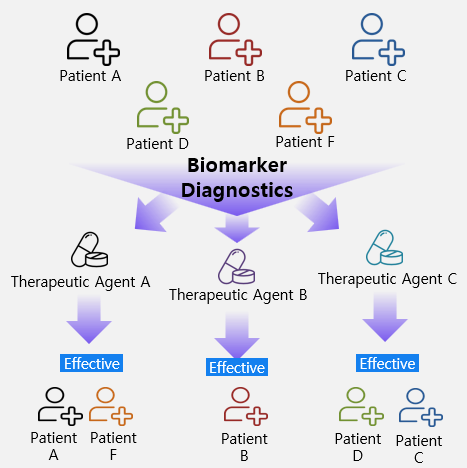
Biomarker-based precision medicine
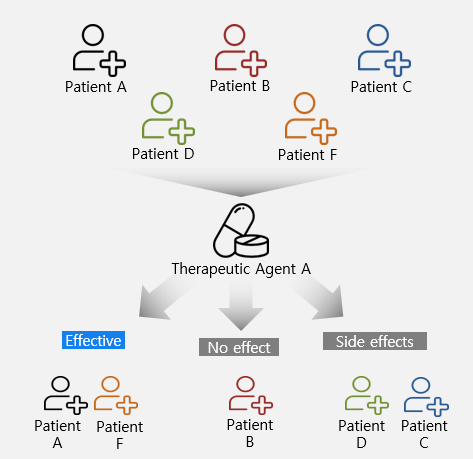
In precision medicine, where treatment selection is based on patient-specific indicator differences,
biomarkers serve as the starting point for the treatment phase.
Past Cancer Treatments
Future Cancer Treatment
Why Is PD-L1 Interpretation Inconsistent?
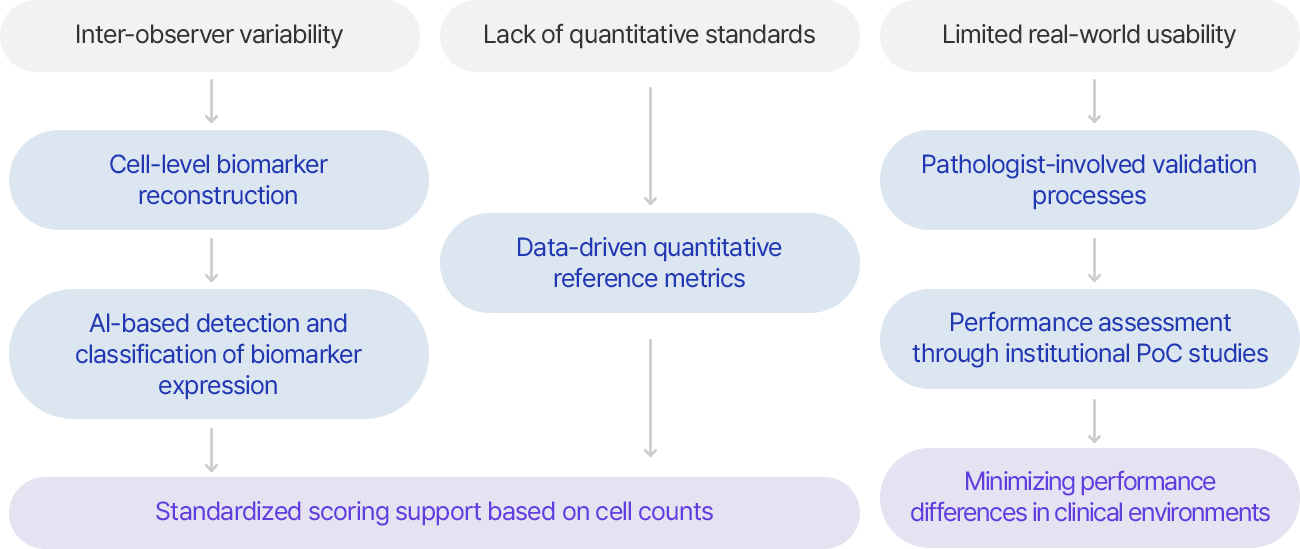
PD-L1 assessment relies heavily on subjective interpretation, making consistent and quantitative evaluation difficult.

Source : PD-L1 expression as a biomarker: challenges and opportunities, Korean Society of Laboratory Medicine, Laboratory Medicine Information, SCL, National Health Information Portal
PD-L1 expression varies depending on the region of the tissue being evaluated, leading to different results within the same sample.
PD-L1 interpretation can differ by 20–30% between pathologists, reflecting subjective judgment in current workflows.
The absence of cell-level quantitative criteria forces reliance on qualitative scoring, reducing confidence in treatment decisions.
Solution Overview
An AI-powered pathology solution that provides quantitative biomarker analysis to
support consistent and efficient interpretation.
What the Product Enables
Cell-level quantification of
biomarker expression
AI-assisted interpretation
support
Clinical workflow–ready
AI solution
Solution Mapping
End-to-End AI Workflow for PD-L1 CPS Analysis in
Gastric and Breast Cancer
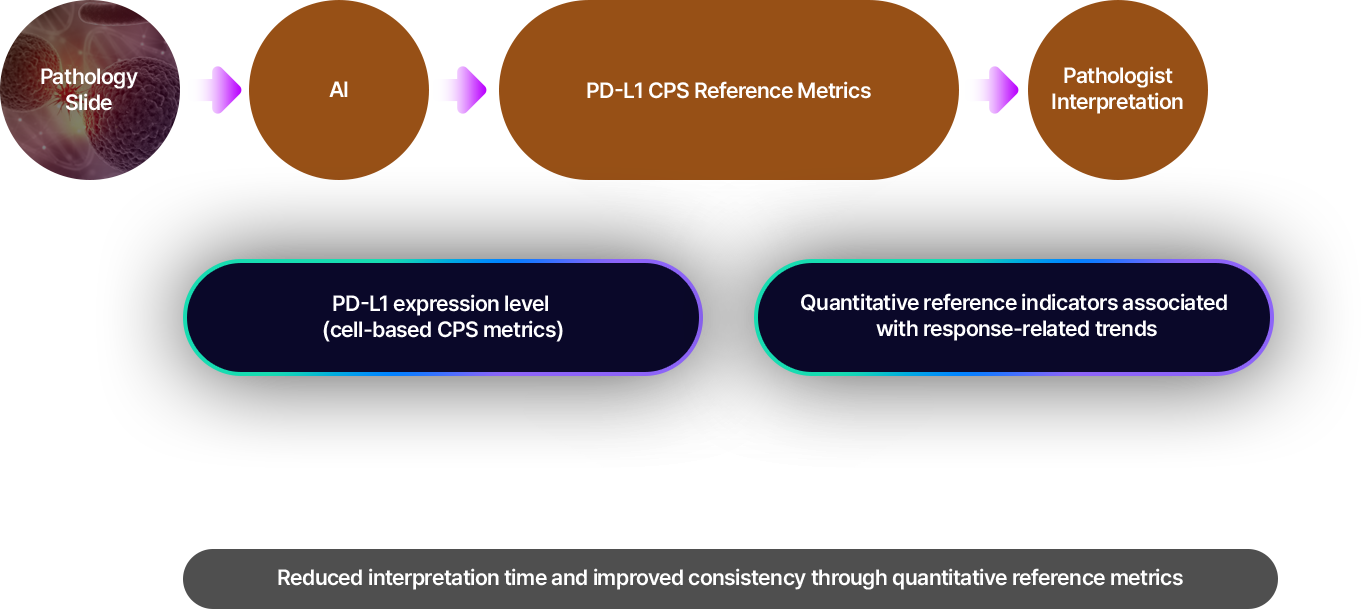
The solution analyzes PD-L1 IHC whole-slide images to generate cell-level, quantitative CPS metrics aligned with existing pathology standards.
This workflow is focused on PD-L1 CPS analysis for gastric and breast cancer.
All scoring logic follows established pathology guidelines, and the AI provides quantitative reference outputs to support pathologist interpretation.
AI-Assisted PD-L1 CPS Analysis Pipeline
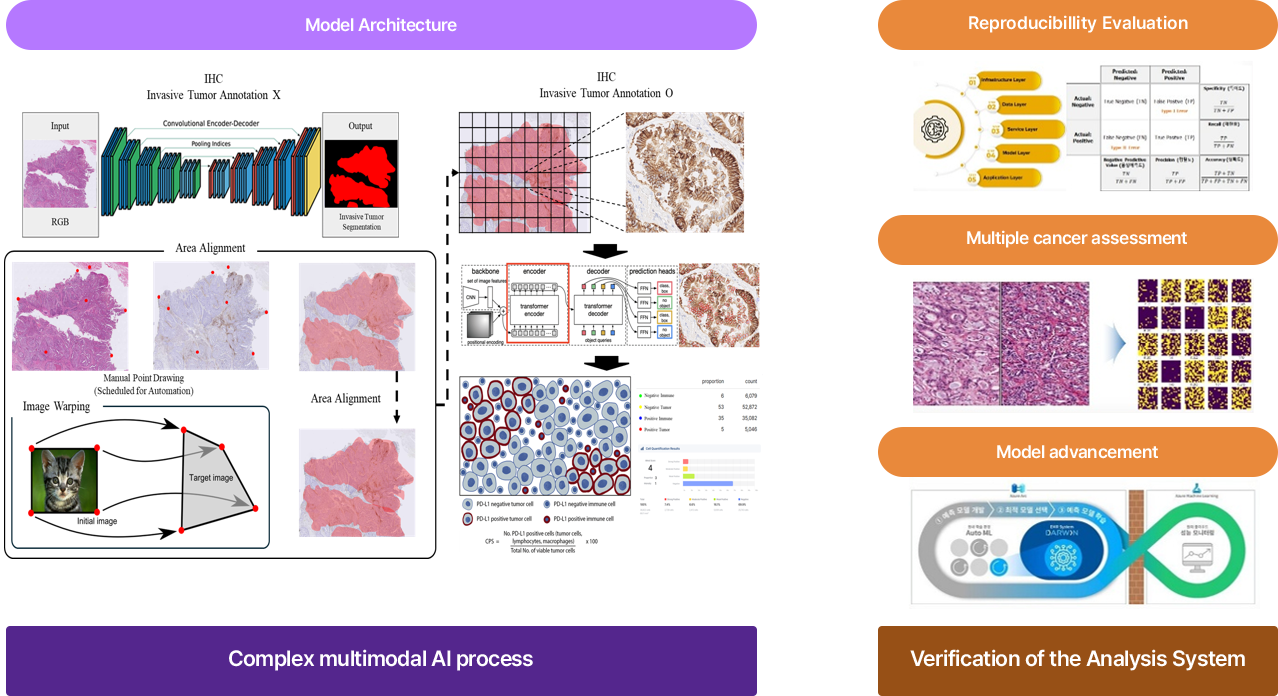
Quantitative PD-L1 CPS–Based Interpretation Support
An AI-assisted pathology system that provides quantitative PD-L1 CPS reference metrics to support
pathologist interpretation in gastric and breast cancer.
The AI analyzes PD-L1 IHC slides at the cellular level and generates quantitative CPS-related metrics.
Outputs are designed to support clinical discussions by providing standardized, reproducible CPS measurements.
The system is designed to integrate into existing pathology workflows, improving efficiency and consistency.